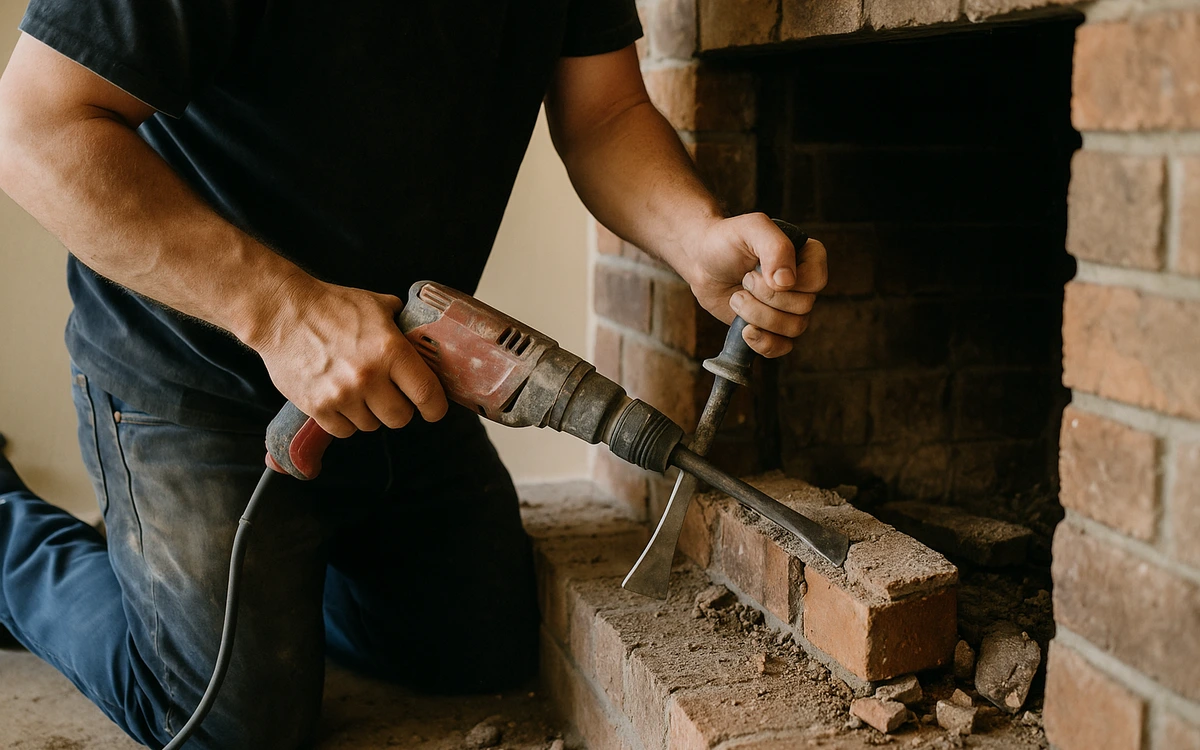
We provide professional fireplace removal services nationwide, handling the teardown and safe closure of the opening. Request a quote today.
What Are the Signs You Need Fireplace Removal?
The clearest sign is a fireplace opening that’s causing drafts or smoke issues, which usually means the firebox and flue path are no longer performing properly. Once one symptom shows up, it’s common to find another issue tied to the same underlying failure—so it helps to look for patterns, not just one isolated problem.
- Smoke smell entering rooms when fireplace is cold
- Drafty air blowing from fireplace opening
- Loose firebrick or crumbling firebox lining
- Damper won’t close or stuck in open position
- Chimney flashing leaks around the fireplace base
Why Does a Smoke Smell Come Into the House When the Fireplace Is Cold?
A smoke smell when the fireplace is cold usually points to leaks or gaps in the flue system, chase, or firebox that allow byproducts to drift into the room. Even with the damper closed, soot-laden smoke can seep through worn mortar joints, failed seals, or a blocked flue that’s venting in the wrong direction. If you’re noticing the odor, don’t keep “testing” it by lighting small fires—have the system inspected first, and if the flue can’t be made safe, removal is the cleanest way to eliminate the problem. A quick check is to look for soot staining in the smoke chamber area or around the damper frame where the smell seems strongest.
How Do You Tell If Drafty Air Is Coming From the Fireplace Opening?
Drafty air blowing from the fireplace opening is a sign there’s an open or poorly sealed path between the indoors and the chimney or flue cavity. Common causes include missing or deteriorated firebox seals, a warped damper, or gaps around the surround where the fireplace was built. When you feel that airflow, sealing alone often won’t last if the underlying firebox and flue structure is failing, and removal may be the more effective fix. After a cold night, pay attention to whether the draft is strongest near the throat area and whether it changes with wind direction.
What Does Loose Firebrick or Crumbling Firebox Lining Mean for Safety?
Loose firebrick or a crumbling firebox lining usually means the firebox’s heat-resistant structure has deteriorated. The lining is built to handle repeated thermal cycling; when mortar beds fail or bricks loosen, hot gases can reach areas they shouldn’t, and debris can also fall into the smoke chamber. That kind of deterioration usually isn’t something you can “patch forever,” because you’re trying to contain high heat with components that are already failing. If you see movement when you lightly probe a loose area or find brick dust in the hearth, that’s a strong reason to plan for removal rather than continued use.
Why Won’t the Damper Close Properly and What Does That Lead To?
If the damper won’t close or stays stuck open, the fireplace becomes an unintentional vent, allowing outside air to move directly through the chimney system. That’s a real issue even when you’re not burning a fire—wind and stack effect can pull warm or cool air into the room, and it can also draw moisture-laden air up the flue. People sometimes try to force it shut or tape over gaps, but that can damage the damper components and still leave leakage paths behind. A better step is to have the damper mechanism inspected, and if it’s seized or the flue path is compromised, removal eliminates that permanent leakage route.
Can Chimney Flashing Leaks Around the Fireplace Base Mean You Should Remove the Fireplace?
Leaks around the chimney flashing at the fireplace base usually mean water is getting past the roof-to-chimney connection and making its way into the chase or firebox area. Over time, that moisture can rot framing, rust metal components, and break down mortar—turning it into more than a surface issue. In cases where the surrounding structure is already damaged or a flashing repair won’t solve hidden entry points, fireplace removal can be the most practical way to stop the water intrusion. Check for signs like rust streaks, damp insulation in the chase, or drywall discoloration near the fireplace surround.
How Much Does Fireplace Removal Cost in Scranton, PA?
Fireplace Removal in Scranton, PA typically costs between $742 and $1,881. Pricing depends on whether the crew is removing only the firebox and chimney connection or also rebuilding the surrounding masonry and mantel. The total can also change based on chase access and how much masonry or hearth demolition is needed to reach stable framing. If the flue is blocked or damaged, added removal and cleanup for soot, debris, and safe closure can push the job toward the higher end.